Cleaner Baby Led Weaning With a BPA-Free Silicone Set
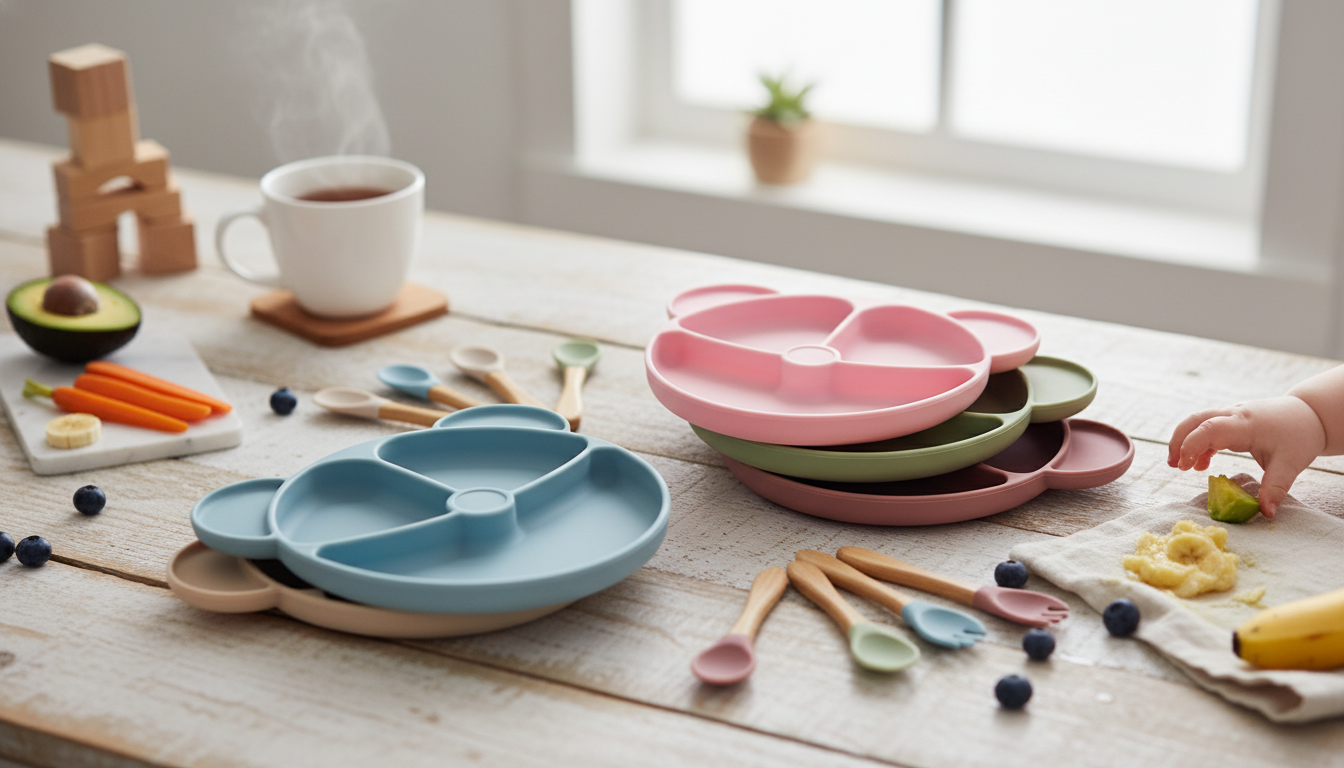
Why a BPA-Free Silicone Feeding Set Makes Early Mealtimes Easier
Early self-feeding is messy by design, but the right tools can make it safer and far less stressful. A BPA-free silicone feeding set supports independence with soft, grippy pieces that are easier to hold, harder to tip, and simpler to clean. Instead of constantly chasing sliding bowls and wiping up full-on food spills, caregivers can focus on steady routines—while babies practice the skills that lead to confident eating.
What Makes Silicone a Smart Choice for Babies
Silicone has become a go-to material for baby feeding gear because it blends comfort, traction, and durability in a way that works well for everyday use.
- Gentle on gums: Soft, flexible silicone is typically kinder to tender gums than hard plastic or metal, especially during teething-heavy months.
- Better grip during the learning curve: The naturally grippy texture helps reduce slips on high-chair trays and tables.
- Heat resistance: Silicone often handles warm foods and common sterilizing approaches well (always follow the product’s specific care instructions and temperature limits).
- Built for repeat use: A reusable set can reduce the need for disposable feeding items and the constant “one more thing to buy” feeling.
What “BPA-Free” Means—and What to Look for Beyond It
“BPA-free” indicates the product is made without bisphenol A, a chemical historically used in some plastics. For more background on BPA and food-contact applications, see the U.S. Food & Drug Administration (FDA) BPA overview.
Still, “BPA-free” is only one checkpoint. A practical set also needs to match daily habits and developmental needs.
- Confirm food-grade materials: Look for clear “food-contact safe” positioning and straightforward care guidance.
- Check cleaning compatibility: If dishwasher use or sterilizing matters in your routine, confirm what’s allowed and how (top rack, boiling limits, steam sterilizer compatibility, etc.). For general cleaning and food safety basics, the CDC food safety guidance is a helpful reference point.
- Choose age-appropriate sizing: Spoon bowls, plate rims, and cup volumes should match what baby can manage without gagging or spilling excessively.
- Do a quick smell check: Avoid strong chemical odors on arrival; wash before first use and discontinue use if unusual smells persist.
Key Pieces That Make Up a Practical Feeding Set
The most useful sets aren’t the biggest—they’re the ones that solve the most common pain points: tipping, slipping, constant outfit changes, and difficult cleanup.
- Suction base bowl or plate: Helps keep food in place during early scooping practice.
- Training spoon(s): Designed for small hands and early coordination.
- Pocket bib: A deep catch pocket can dramatically cut down on floor cleanup and outfit swaps.
- Cup options: Open cups build skills, straw cups can be easier for sipping, and handled cups help with transitions.
| Item | Benefit during feeding | Shopping tip |
|---|---|---|
| Suction bowl/plate | Reduces tipping and sliding | Look for a wide suction base and a firm tab for release |
| Training spoon | Easier grip and smaller bites | Rounded edges; size that fits baby’s mouth comfortably |
| Pocket bib | Catches food and drips | Adjustable neck; smooth interior for quick rinsing |
| Cup (open/handled/straw) | Supports drinking skills | Choose the style that matches current skills and supervision needs |
How This Feeding Set Fits Different Stages
Babies change fast—sometimes week to week. A well-chosen silicone feeding set can stay useful across multiple phases instead of being “outgrown” after a month.
Cleaning, Sterilizing, and Keeping Silicone in Top Shape
| Task | Frequency | Notes |
|---|---|---|
| Standard wash | After each use | Clean creases and bib pockets thoroughly |
| Dishwasher cycle (if allowed) | As needed | Top rack placement helps reduce heat stress |
| Deep clean for lingering smells | Occasionally | Rinse well and dry fully to prevent odor retention |
| Inspect for damage | Weekly | Replace if torn, cracked, or deformed |
Product Spotlight: BPA-Free Baby Silicone Feeding Set
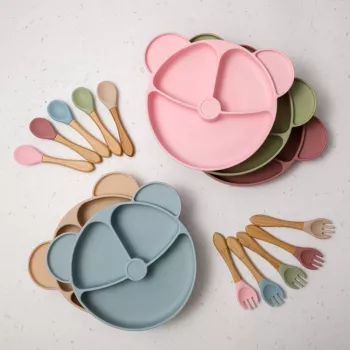
If the goal is a simpler, more consistent setup, the BPA-Free Baby Silicone Feeding Set brings the core mealtime pieces together in one coordinated kit. It’s designed to support daily feeding routines with baby-friendly silicone items that are easy to grip, stable on the tray, and straightforward to wash.
| Detail | Value |
|---|---|
| Product | BPA-Free Baby Silicone Feeding Set |
| Price | 42.95 USD |
| Availability | In stock |
| Product page | https://veritelle.com/bpa-free-baby-silicone-feeding-set/ |
Simple Mealtime Routines That Reduce Mess Without Restricting Learning
Other In-Stock Picks for Busy Homes
- Women’s Genuine Leather Boston Shoulder Bag for carrying daily essentials hands-free.
- Bohemia Plush Velvet Sofa Cover to help protect seating from spills, crumbs, and everyday wear.
FAQ
Is silicone safer than plastic for baby feeding?
Food-grade silicone is commonly used for baby items and is valued for its softness and durability. Look for products intended for food contact, follow the care instructions, and replace any pieces that become torn, cracked, or deformed.
Can silicone plates and bibs go in the dishwasher or be sterilized?
Many silicone feeding items are dishwasher safe and can tolerate common sterilizing methods, but this varies by product. Confirm the specific item’s guidance and temperature limits before using high-heat cycles, boiling, or steam sterilizers.
Why does silicone sometimes hold onto odors, and how can it be fixed?
Silicone can hold onto oils and strong-smelling foods over time. A hot, soapy soak followed by a thorough rinse and complete air-drying often resolves lingering smells; avoid harsh abrasives that can roughen the surface.










Leave a comment