Breathe Better: 50-Step Checklist for Calm, Focus, Energy

Breathe Better: A 50-Step Checklist for Calm, Focus, and Steady Energy
Breathing is one of the fastest, most portable ways to shift from scattered or tense to clearer and more steady. A checklist approach makes it easier to build consistency: set up your space, choose a technique that fits the moment, track what you notice, and adjust safely. Use the steps below to create a repeatable routine for relaxation, mental clarity, and mindful focus—at home, at work, or on the go.
What “better breathing” looks like in daily life
- Calm: slower, quieter breaths; less jaw/shoulder tension; fewer stress spirals.
- Focus: smoother attention shifts; fewer impulsive reactions; better task initiation.
- Energy: reduced afternoon slump; improved alertness without feeling wired.
- Mindfulness: noticing breath patterns without forcing them; easier body awareness.
- A realistic goal: consistency over intensity—comfortable breathing beats “perfect” breathing.
Breath-based relaxation is widely used in stress management programs and is often paired with other calming strategies. For background on relaxation approaches, see resources from NCCIH, Harvard Health Publishing, and the American Psychological Association.
Quick start: the 5-minute reset (for calm + clarity)
- Step 1: Posture check—feet grounded, spine tall, jaw unclenched, tongue relaxed.
- Step 2: Breathe through the nose if comfortable; keep the breath soft and quiet.
- Step 3: Extend the exhale slightly (example: inhale 4, exhale 6) for 8–12 cycles.
- Step 4: If thoughts race, count exhales only (1–10, then restart).
- Step 5: Finish with one normal breath and notice: warmth, tingling, ease, or calm.
Keep effort low. If you feel “air hunger,” shorten the counts (for example, 3 in / 4 out) and prioritize smoothness over length.
How to use a 50-step checklist without getting overwhelmed
- Treat it like a menu: pick 5–10 steps per session, not all 50.
- Create anchors: same place/time cue (after coffee, before meetings, before sleep).
- Use three phases: Prepare (1–2 minutes), Practice (3–10 minutes), Reflect (30 seconds).
- Track only two signals at first: stress level (0–10) and focus level (0–10).
- Progress by comfort: reduce strain first, then add duration, then add complexity.
A checklist works best when it removes decisions. When you already know what comes next, it’s easier to practice on busy days—especially when you only have 90 seconds between tasks.
Choose the right breathing technique for the moment
Different goals call for different “dials”: pace, depth, and structure (like counting). If you’re unsure, start with a slightly longer exhale and keep everything gentle.
| Goal | Technique to try | How it feels | When to avoid |
|---|---|---|---|
| Calm down fast | Extended exhale (4 in / 6 out) | Settling, less tension | If air hunger increases—shorten counts |
| Sharpen focus | Box breathing (4/4/4/4) or (3/3/3/3) | Even, structured, centered | If breath-holds feel stressful—reduce hold or skip |
| Steady energy | Rhythmic breathing (5 in / 5 out) for 3–5 minutes | Balanced alertness | If lightheaded—slow down and reduce depth |
| Sleep support | 4-7-8 adapted (4 in / 6–8 out) without strain | Drowsy, relaxed | If it feels too intense—use 3 in / 5 out instead |
A practical 50-step flow (grouped into 5 phases)
Phase 1 — Set the scene (Steps 1–10)
Reduce distractions, loosen tight clothing, choose a posture you can maintain, set a timer, and decide your goal (calm/focus/energy). Even a small cue—like sitting in the same chair—can make the routine feel automatic.
Phase 2 — Body release (Steps 11–20)
Soften the face, drop the shoulders, relax the belly, unclench hands, lengthen the spine, and release the tongue from the palate. When the body “lets go,” the breath usually gets quieter on its own.
Phase 3 — Breath pattern (Steps 21–35)
Choose nasal breathing if possible, slow the pace, smooth transitions between inhale and exhale, and use an option like extended exhale or gentle counting. If you feel strained, reduce depth first—then slow down.
Phase 4 — Mind training (Steps 36–45)
Label distractions (“thinking”), return to breath sensation, and keep effort at 6/10 or less. Counting can be your guardrail: if you lose count, you simply restart without judging the session.
Phase 5 — Close + integrate (Steps 46–50)
Take one normal breath, reassess stress/focus, note what worked, plan the next session, and return to activity slowly—standing up or jumping into email too fast can erase the calm you just built.
Common mistakes that make breathing exercises feel worse
Make it stick: simple routines for work, workouts, and sleep
Digital checklist option for a guided, repeatable practice
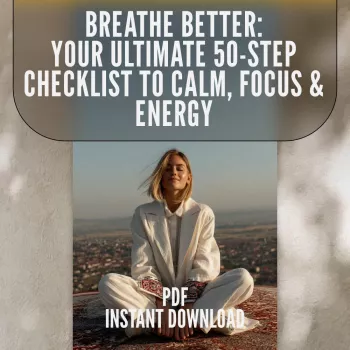
- Breathe Better: Your Ultimate 50-Step Checklist to Calm, Focus & Energy (digital download)
- Calvin Klein Retro Square Sunglasses with Dark Lenses (helpful for outdoor “breathing breaks” by reducing glare and encouraging relaxed, steady pacing)
FAQ
How often should breathing exercises be practiced to notice a difference?
Daily practice for 3–10 minutes is a realistic baseline, and “micro-sessions” (60–120 seconds) can still help during stress spikes. Track a simple stress and focus score (0–10) before and after to see patterns. Comfort matters more than intensity.
What should be done if a breathing exercise causes dizziness or anxiety?
Return to normal breathing, sit down, and slow the pace while reducing depth and counts; skip breath-holds until things feel stable. If symptoms are severe, persistent, or unusual for you, seek medical guidance.
Is it better to breathe through the nose or mouth for relaxation?
Nasal breathing is often preferred for calming practices when it feels comfortable and unforced. If you’re congested or nasal breathing feels stressful, gentle mouth breathing can be a temporary option—keep the breath quiet and easy either way.









Leave a comment