Baby Wooden Tableware Toy Set for Pretend Mealtime Play
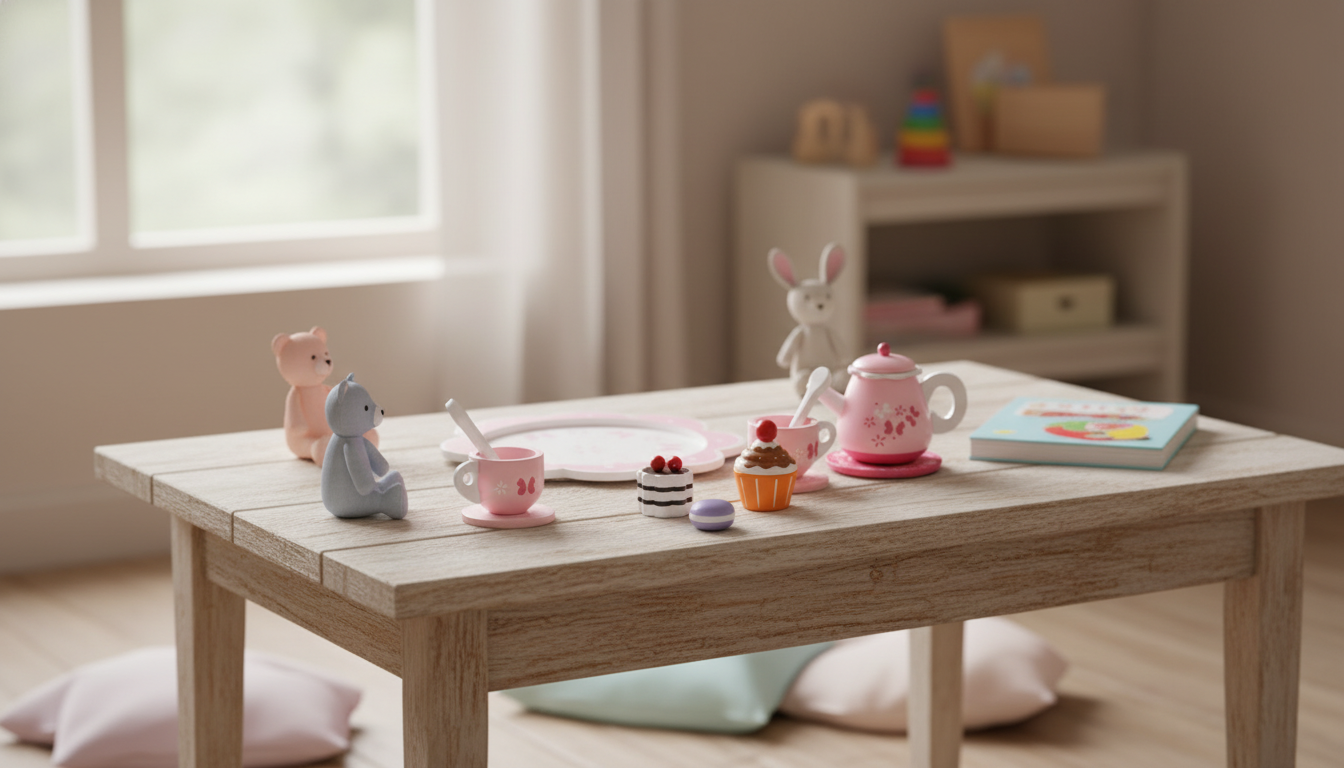
Baby Wooden Tableware Toy Set: Pretend-Play Dining for Early Skills
A wooden tableware toy set turns everyday mealtime routines into safe, screen-free pretend play. With child-friendly pieces sized for small hands, it supports early fine-motor practice, language building, and social play—while giving caregivers an easy way to model manners, sharing, and simple sequences like setting the table and cleaning up.
What This Toy Set Helps Kids Practice
Pretend dining looks simple, but it’s packed with repeatable actions that help little ones learn through hands-on exploration.
- Fine-motor control: grasping, stacking, placing pieces, and coordinating both hands
- Language growth: naming items (plate, cup, spoon), describing actions (pour, serve), and role-play dialogue
- Social-emotional skills: turn-taking, sharing, hosting, and cooperative play with siblings or caregivers
- Early routines: “set the table,” “serve,” “eat,” and “clean up” sequences that mirror real life
- Imaginative play: creating stories (tea party, café, family dinner) and practicing problem-solving
What to Look For in a Baby-Friendly Wooden Tableware Set
Not all sets are made the same. A few practical checks help ensure the pieces feel good in small hands and hold up to daily play.
- Smooth edges and splinter-free finishing: surfaces should feel polished with no sharp corners
- Non-toxic materials: look for water-based paints/finishes and clear labeling around toy safety
- Age-appropriate sizing: pieces large enough to reduce choking risk and easy for small hands to hold
- Durability: hardwood or sturdy composite wood that resists dents from drops and enthusiastic play
- Easy-to-clean design: wipeable surfaces and minimal crevices where grime can collect
- Balanced set composition: a mix of plates, cups, utensils, and food/serving items to support role-play variety
For additional guidance on selecting safe toys and supervising play, the U.S. Consumer Product Safety Commission and the American Academy of Pediatrics both share helpful, caregiver-friendly toy safety checklists.
At-Home Play Ideas That Keep It Fresh
Rotating mini “themes” helps the same set feel new again—without adding clutter.
- “Set the table” challenge: name each item and place it correctly (plate, cup, spoon/fork) to practice matching and spatial skills
- Color or count games: count pieces as they’re set out; sort items by color or type
- Restaurant role-play: one child is the server, another is the customer; practice greetings and polite phrases
- Story prompts: “Who is coming to dinner?” “What is today’s special?” to encourage narrative thinking
- Clean-up routine: assign a small basket or tray and make returning each piece part of the play script
A simple way to extend play is to add gentle “sequence words” during the routine: first/next/last, before/after, empty/full. Those tiny cues turn a tea party into a structured, confidence-building loop kids can repeat independently.
Simple Safety and Care Checklist
Wooden toys are often easy to maintain, but they still benefit from quick, consistent checks—especially if they’re used daily.
- Inspect regularly for cracks, chips, or loose parts—remove any damaged pieces from play
- Supervise younger children, especially if the set includes smaller accessories
- Clean with a damp cloth and mild soap if needed; dry promptly to protect the wood
- Store in a dedicated bin or shelf to reduce lost pieces and accidental stepping hazards
- Avoid soaking wooden toys for long periods unless the manufacturer specifies it is safe
Quick Checklist for Choosing and Using Wooden Tableware Toys
| Check | Why it matters | What to do |
|---|---|---|
| Smooth finish | Helps prevent splinters and scratches | Run fingers along edges; avoid rough spots |
| Non-toxic coating | Reduces exposure to harmful chemicals | Look for clear safety labeling and reputable sellers |
| Piece size | Lower risk for younger children | Choose larger pieces for toddlers and supervised play |
| Durability | Longer-lasting play value | Prefer sturdy wood and well-joined parts |
| Easy cleaning | Keeps play hygienic | Wipe clean; dry fully before storing |
Why Wooden Tableware Can Be a Great Gift
Mealtime play is one of those themes kids immediately understand—no complicated rules needed. A well-made wooden set can become a go-to activity that works in short bursts or longer play sessions.
- A practical theme kids recognize immediately—mealtime pretend play is intuitive and repeatable
- Works well for solo play or group play, making it useful in playrooms and day-to-day routines
- Pairs easily with play kitchens, doll play, or tea-party sets for expanded pretend scenarios
- Often more durable than lightweight plastic alternatives when well-made and properly finished
- Timeless look that fits many nursery and playroom styles
Product Spotlight: Baby Wooden Tableware Toy Set
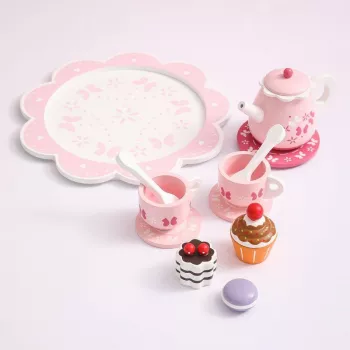
If you’re building a pretend-play corner or refreshing a toy shelf with something that gets used again and again, the Baby Wooden Tableware Toy Set is designed for pretend dining and early role-play routines like serving, sharing, and hosting. The wooden construction offers a tactile, screen-free play experience, and it’s an easy pick for birthdays, holidays, and playroom upgrades. See current price and availability on the product page.
More In-Stock Picks to Explore
- Women’s Genuine Leather Boston Shoulder Bag
- Bohemia Plush Velvet Sofa Cover
- 650W Electric Airless Paint Sprayer
FAQ
What age is a wooden tableware toy set suitable for?
Follow the manufacturer’s age guidance and supervise younger toddlers, especially if any accessories are smaller. For little ones, choose larger pieces to reduce choking risk, and add more complex role-play as language skills grow.
How should wooden tableware toys be cleaned?
Wipe with a damp cloth and mild soap when needed, then dry promptly to protect the wood. Avoid soaking unless the maker specifically says it’s safe, and inspect pieces regularly for chips or cracks.
Are wooden toys safer than plastic toys?
Safety depends more on design and testing than on material alone. Look for smooth edges, non-toxic finishes, age-appropriate sizing, and clear adherence to toy safety standards.










Leave a comment