10-Minute Daily Stretching Routine for Easy Flexibility
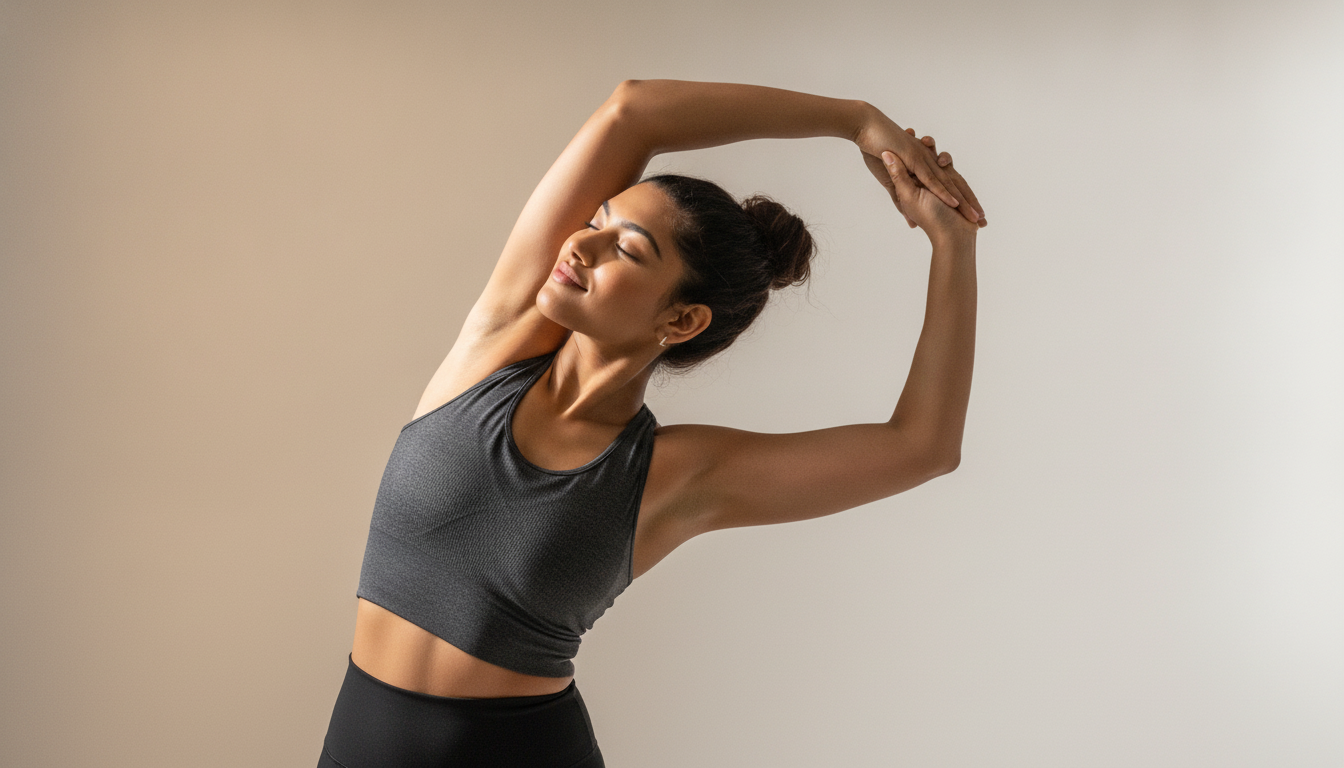
Stretch Every Day: A Simple Daily Routine for Better Flexibility
Daily stretching works best when it’s short, consistent, and matched to how the body actually feels. A repeatable 10-minute flow—warm up, move through a few key areas, then finish with calming holds—can reduce stiffness and improve comfort without turning stretching into a chore. The goal isn’t to “force” range of motion; it’s to practice relaxed, controlled length over time so your body accepts the new range as normal.
What “flexibility” really means day to day
Flexibility is the ability of muscles and connective tissue to lengthen. Mobility is the ability to control movement through a range—so you can use that flexibility without feeling wobbly, pinchy, or unstable. Both matter for everyday tasks like sitting comfortably, reaching overhead, walking with an easy stride, or getting up from the floor.
- Consistency beats intensity: 8–12 minutes most days typically outperforms occasional long sessions.
- Stretch sensation should be moderate: mild-to-moderate tension is fine; sharp pain, pinching, or numbness is not.
- Progress shows up quietly at first: many people notice improved posture and less “creaky” stiffness before big range-of-motion changes.
For general guidelines on frequency and hold times, see the American College of Sports Medicine (ACSM) flexibility recommendations.
A quick safety checklist before stretching
- Warm tissues first: take 2–3 minutes to brisk-walk, march in place, or do gentle arm circles before deeper stretching.
- Skip bouncing for long holds: for static stretches, ease in gradually and let the breath do the work.
- Back off for joint symptoms: tingling, catching, or joint pain means adjust the angle, reduce range, or stop.
- Special cases need extra care: if you’re recovering from injury or managing conditions like disc issues or hypermobility, get clinician guidance and prioritize controlled mobility over deep stretching.
For practical do’s and don’ts, Mayo Clinic’s overview is a helpful reference: stretching safety tips.
The 10-minute daily stretching flow (repeatable routine)
This routine is designed to be easy to repeat. Use a timer so you’re not guessing, and do both sides even if one side feels tighter. Keep the intensity around a 4–6 out of 10: enough to feel a stretch, not so much that you brace or hold your breath.
Breathing cue: inhale through the nose, exhale slowly. On each exhale, soften into a slightly deeper position—without forcing.
10-Minute Daily Stretching Plan
| Step | Move | Time | Key cue |
|---|---|---|---|
| Warm-up | March in place + arm swings | 2 min | Keep it easy; build warmth |
| Neck/upper back | Chin tucks + gentle side bend | 45 sec/side | No pulling on the neck |
| Chest/shoulders | Doorway chest stretch | 45 sec/side | Ribs down; breathe into chest |
| Hips (front) | Half-kneeling hip flexor stretch | 60 sec/side | Tuck pelvis slightly; squeeze glute |
| Hips (back) | Figure-4 glute stretch | 60 sec/side | Keep spine long; avoid knee strain |
| Hamstrings | Supine hamstring stretch (strap/towel) | 60 sec/side | Relax foot; no locking the knee |
| Calves/ankles | Wall calf stretch | 45 sec/side | Heel down; knee straight then slightly bent |
| Downshift | Child’s pose + slow breathing | 1–2 min | Long exhale; let shoulders soften |
If you want a step-by-step layout you can follow without thinking (including how to scale each move for tight days), Stretch Every Day: Simple Guide to Flexibility | Daily Stretching for Flexibility Guide eBook keeps the routine organized and repeatable.
Where most people get stuck—and simple fixes
- Stretching too cold: do the flow after a short walk, a shower, or a 2-minute warm-up so tissue is more responsive.
- Holding your breath: count slow exhales (try 5–6 seconds out). If you can’t breathe smoothly, you’re pushing too hard.
- Going too intense: reducing intensity often improves results because you can repeat the routine daily and recover well.
- Ignoring strength: add light strength work 2–3 days per week so new range feels stable and usable (think squats to a chair, rows, calf raises, and gentle core work).
- Inconsistent timing: attach stretching to a habit that already happens: after coffee, after brushing teeth, after a walk, or before bed.
One surprisingly effective “consistency hack” is to do your 2-minute warm-up outside. If you’re heading out for a short walk to warm up, comfortable sun protection helps make it feel effortless—Calvin Klein Retro Square Sunglasses with Dark Lenses can be an easy grab-and-go addition for brighter days.
Small progress plan for 14 days
For a clear explanation of why stretching supports comfort and movement quality over time, Harvard Health offers a straightforward overview: the importance of stretching.
A simple guide that keeps the habit effortless
When you want a structured routine you can repeat anywhere, Stretch Every Day: Simple Guide to Flexibility | Daily Stretching for Flexibility Guide eBook is an easy option to keep on your phone for quick daily sessions.
FAQ
Is it better to stretch in the morning or at night?
Either works. Morning stretching can reduce stiffness, while evening stretching can help you downshift; the best time is the one you’ll do consistently, ideally after a minute or two of light movement.
How long should each stretch be held for flexibility?
A common target is 30–60 seconds per stretch on each side using gentle tension and slow breathing. If you’re new to stretching, start with 15–30 seconds and build gradually.
Should stretching hurt to be effective?
No. Effective stretching feels like moderate tension, not sharp pain, burning, numbness, or joint pinching; those are signs to reduce range, change the angle, or stop.











Leave a comment