Crab Steering Wheel Toy: Interactive Play for Toddlers
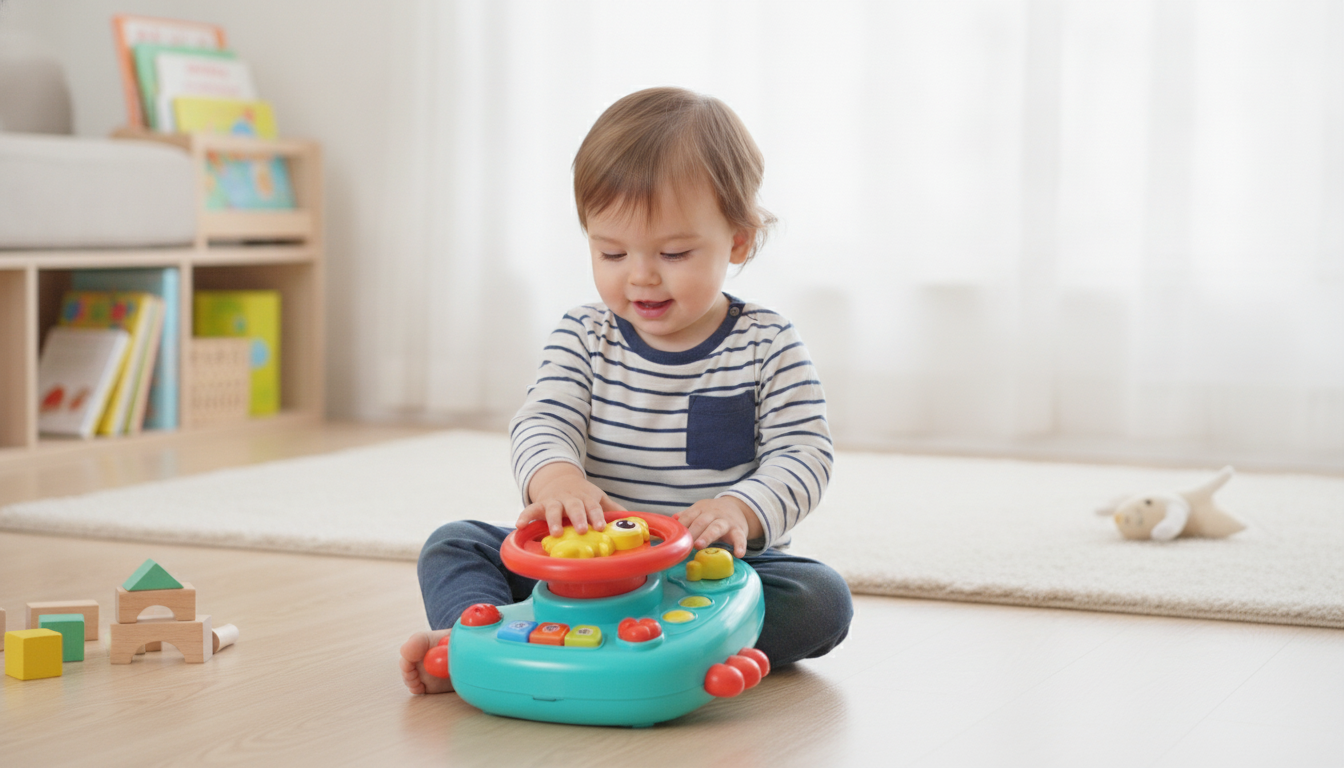
Toddlers love to copy the grown-ups, and a steering wheel toy turns that curiosity into hands-on play. An interactive crab-themed wheel adds bright character appeal while encouraging fine-motor practice, cause-and-effect learning, and imaginative “driving” stories—at home, on the go, or during quiet play breaks.
What Makes a Steering Wheel Toy So Engaging at This Age
A toddler steering wheel toy works because it feels like “real life” in a size they can manage. When a child turns the wheel and gets an immediate response, play becomes a loop of discovery, repetition, and growing confidence.
- Pretend play that feels “real”: turning a wheel, pressing buttons, and hearing responses mirrors everyday experiences like car rides.
- Cause-and-effect learning: toddlers learn that pushing a button creates a sound or light, reinforcing early problem-solving.
- Fine-motor development: gripping, turning, and tapping helps strengthen hand muscles and coordination.
- Language growth: sound effects and role-play prompts (stop/go, beep, turn) support early vocabulary through repetition.
- Emotional regulation: focused, repetitive play can be calming during transitions or downtime.
Interactive Features to Look For in a Crab Steering Wheel Toy
Not all interactive wheels are built the same. For toddlers, the best designs reward curiosity without creating frustration (stiff turning, tiny buttons) or sensory overload (overly loud sounds, nonstop effects).
- Responsive buttons with clear feedback: sounds and/or lights that trigger right away help toddlers connect action to result.
- A wheel that turns smoothly: a toddler-friendly grip with no pinching points makes repeat play more comfortable.
- Multiple play modes: music, vehicle sounds, or simple “driving” cues can keep interest beyond the first week.
- Volume settings (or reasonable loudness): helpful for indoor play and parent comfort.
- Portable design: easy to hold on a lap or use on the floor, with controls that aren’t too small.
- Easy-to-clean and durable: wipeable surfaces and sturdy construction matter for everyday use.
Quick checklist for toddler-friendly interactive play
| Feature | Why it matters | What to check |
|---|---|---|
| Smooth steering action | Supports coordination without frustration | Wheel turns easily; no grinding or sticking |
| Clear cause-and-effect buttons | Builds attention and problem-solving | Button press triggers immediate feedback |
| Reasonable sound level | Prevents sensory overload | Comfortable volume at arm’s length |
| Sturdy build | Withstands drops and enthusiastic play | No loose parts; seams feel secure |
| Easy wipe-down | Keeps toys hygienic | Non-porous surfaces; simple crevices |
Skills This Toy Can Support During Everyday Play
A crab steering wheel toy can fit naturally into daily routines—before dinner, while a caregiver finishes a quick task, or during a travel day. The key is that toddlers practice skills while they’re having fun “driving.”
- Hand-eye coordination: turning the wheel while looking at buttons or lights helps integrate movement and visual tracking.
- Bilateral coordination: one hand stabilizes while the other presses buttons or turns the wheel.
- Early sequencing: simple routines like “start → drive → stop → honk” build foundational planning skills.
- Imaginative play: toddlers narrate trips to the park, grocery store, or “crab beach,” practicing storytelling.
- Social play: siblings or caregivers can take turns being the “driver” and “passenger,” practicing sharing and waiting.
For a general reference point on age-typical skills (like emerging pretend play and coordination), the CDC’s developmental milestone guidance is a helpful resource: CDC: Developmental Milestones.
Simple Play Ideas (2–5 Minutes Each)
Short, repeatable games tend to work best for toddlers. Rotate mini-activities so the toy stays fresh without needing long attention spans.
- Red light, green light: call “stop/go,” and have your toddler respond with wheel turns and a favorite button.
- Sound hunt: ask for a specific sound (horn, music, engine) and let them search for the matching control.
- Follow-the-route: place two pillows as “turns” and coach left/right motions while seated on the floor.
- Passenger talk: practice phrases like “buckle up,” “all done,” and “again,” during pretend trips.
- Quiet-time routine: choose one calmer mode (if available) and keep play gentle before meals or naps.
Safety and Practical Tips for Parents and Caregivers
Interactive toys are built for busy hands, but it’s still worth setting up play in a way that’s comfortable and safe—especially for toddlers who like to toss toys after a button-mashing burst.
For broader toy safety pointers, consult the American Academy of Pediatrics toy safety guidance and the U.S. Consumer Product Safety Commission toy safety resources.
Interactive Crab Steering Wheel Toy for Toddlers: At-a-Glance
Product snapshot
| Item | Details |
|---|---|
| Name | Interactive Crab Steering Wheel Toy for Toddlers |
| Price | $27.49 USD |
| Availability | In stock |
| Product page | https://veritelle.com/interactive-crab-steering-wheel-toy-for-toddlers/ |
Helpful Add-Ons for Play and Travel
- Carry-it-anywhere option: A roomy everyday bag helps keep a “busy hands” kit together (toy, wipes, snack container). Consider the Women’s Genuine Leather Boston Shoulder Bag.
- Protect-the-couch layer: For at-home play (especially if snacks are involved), a washable cover can help keep soft surfaces looking fresh. The Bohemia Plush Velvet Sofa Cover is an option for daily living spaces.
When This Toy Makes a Great Gift
FAQ
What age is a steering wheel toy best for?
Many toddlers are ready once they can grasp, turn, and press buttons with purpose and are starting simple pretend play. Always check the manufacturer’s age guidance and supervise younger toddlers, especially if they mouth toys.
Are sound-and-light toys overstimulating for toddlers?
It depends on volume, how frequently the toy triggers effects, and your child’s temperament. Keeping sessions short, using calmer modes when available, and taking breaks if your toddler seems dysregulated can help.
How can caregivers use a steering wheel toy to support learning?
Narrate actions (“left,” “right,” “stop”), take turns being driver and passenger, and play simple copy patterns like “beep-beep-stop.” Pretend trips also build language by naming places, actions, and feelings along the way.







Leave a comment