-
Shop
- Adidas
- Advanced Technologies
- Armani
- Bags
- Best-Sellers
- Birkenstock
- Boss
- Calvin Klein
- Car Accessories
- Crocs
- Dating & Social Skills
- Digital Resources
- Budgeting & Saving
- Emotional Intelligence
- Entrepreneurship & Business Growth
- Financial Independence
- Financial Mindset & Psychology
- Goal Setting
- Leadership
- Mindfulness
- Motivation
- Positive Thinking
- Productivity
- Self Confidence
- Sleep Improvement
- Stress Management & Relaxation
- Yoga & Mind-Body Practices
- Dr. Martens
- Drones
- Education & Learning
- Family & Parenting
- Fashion
- Fashion Accessories
- Financial Education
- Furniture
- Gadgets
- Health & Beauty
- Health & Wellness
- Home & Garden
- Home Decor
- Home Supplies
- Kids & Babies
- Lighting
- Massagers
- Mindset
- New Balance
- Nike
- Patio, Lawn & Garden
- Personal Growth
- Pet Care
- Pet Supplies
- Pets
- Shoes
- Sport & Outdoors
- Summer 2025 Fashion Collection
- Sunglasses
- Super Deals
- Timberland
- Tommy Hilfiger
- Travel
- Vans
- Wealth
- Winter Fashion
- Women’s Wellness & Lifestyle
- YouTube Shorts Best-Sellers
Deep Sleep Checklist: Reddit-Approved Night Routine
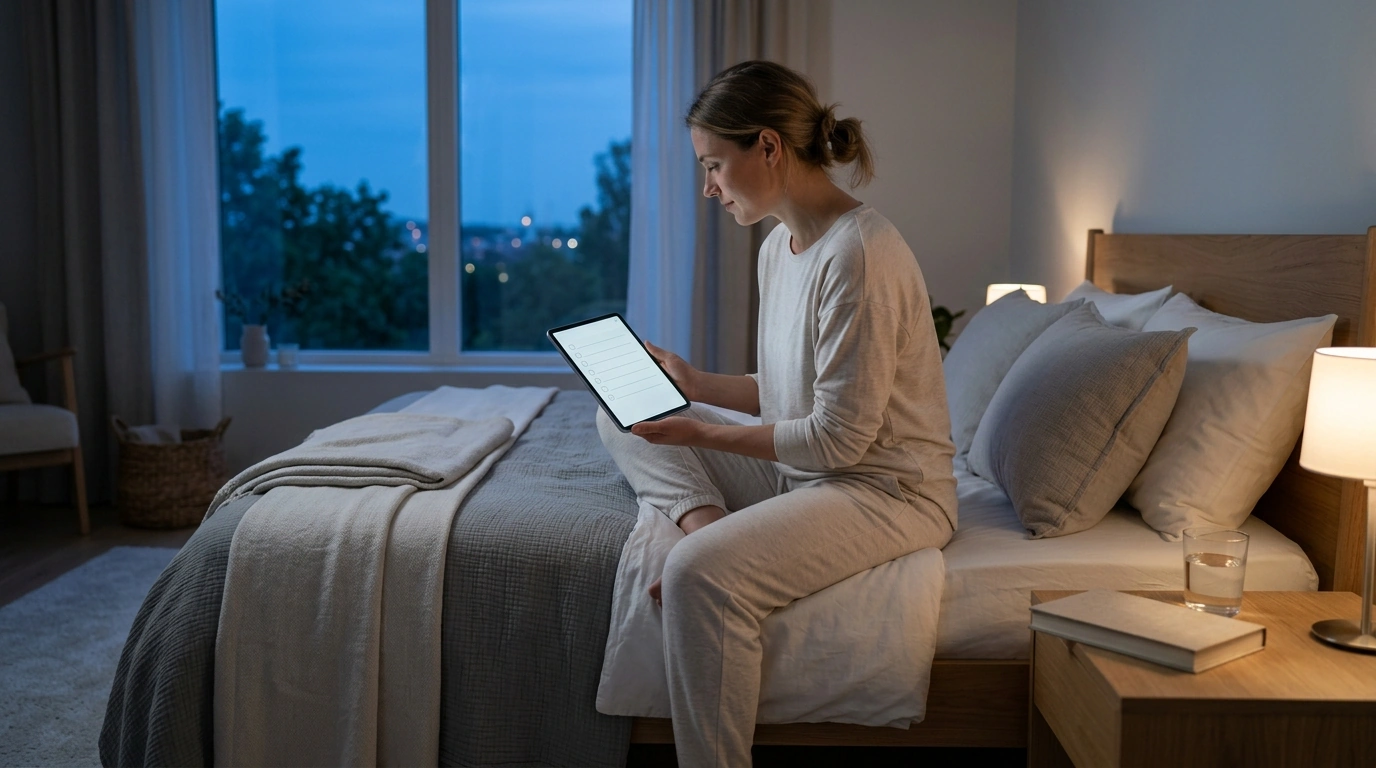
Deep Sleep Success Checklist: A Simple Night Routine That Turns “Trying to Sleep” Into Actually Sleeping
Deep sleep rarely improves from one big change. It improves when small, repeatable steps happen in the same order—night after night—until your body starts treating bedtime as a cue, not a negotiation. Our Deep Sleep Success Checklist is a digital download built to make that consistency easy: a clear, Reddit-approved routine structure you can follow, track, and adjust without overthinking.
If you’ve ever had a week where sleep was “fine” and then suddenly wasn’t—without any obvious reason—this checklist is designed for you. Our team focused on the practical stuff: what to do, when to do it, and how to keep it realistic when life gets messy.
What the Deep Sleep Success Checklist helps solve
- Bedtime drift: going to bed at different times and wondering why sleep feels unpredictable
- “Tired but wired” nights: too much light, stimulation, or late-day choices that keep your brain on
- Middle-of-the-night wakeups: routines that don’t support a smooth wind-down into deeper stages
- Overcomplication: trying to stack 12 sleep hacks instead of building one routine that sticks
- Lack of feedback: no simple way to see what helps and what’s hurting sleep quality
We also built it to work alongside the basics recommended by trusted health sources like the CDC and the American Academy of Sleep Medicine: consistent timing, a supportive sleep environment, and habits that reduce late-night stimulation.
How to use the checklist (so it stays realistic)
- Pick a consistent target: choose a bedtime window and commit to it for 7 nights before changing anything.
- Start small: follow the checklist at 70–80% rather than aiming for perfection.
- Use it as a sequence: do the steps in the same order to train a reliable “sleep cue chain.”
- Track outcomes, not just actions: note sleep latency (time to fall asleep), awakenings, and morning energy.
- Adjust one variable at a time: change only one step for 3–4 nights so patterns become obvious.
That last point matters more than it sounds. If you change three things at once—earlier bedtime, no screens, different room temperature—you won’t know what actually moved the needle. Our team designed the checklist to keep you honest and simple: one lever at a time, long enough to spot a trend.
The routine framework inside the checklist (the part that makes it “Reddit-approved”)
- A short shutdown step that closes the day: tomorrow list, quick tidy, alarms set—so your brain stops reopening tasks at midnight.
- Light and screen boundaries: dimming, night mode, and a cut-off time that’s easy to follow.
- A simple body cue: warm shower, stretching, or breath pacing to shift into parasympathetic mode.
- Bedroom setup prompts: temperature, noise strategy, and comfort checks that reduce micro-wakeups.
- A fallback plan for restless nights: what to do if sleep doesn’t happen quickly, without spiraling.
A sample night timeline (copy/paste into real life)
Night Routine Checklist Table (quick reference)
| Step | When to do it | Why it matters | Make it easier |
|---|---|---|---|
| Light dim + screen cut-off | 60–30 min before bed | Supports melatonin timing and reduces stimulation | Use one lamp only; set a nightly reminder |
| Day shutdown (tomorrow list) | 45–30 min before bed | Stops unfinished tasks from resurfacing at lights out | Write 3 bullets max |
| Warm wash-up or shower | 45–20 min before bed | Helps the body cool afterward, supporting sleepiness | Keep it brief; warm, not hot |
| Breath pacing or gentle stretch | 20–10 min before bed | Downshifts the nervous system | Choose one 3–5 minute option |
| Room check (cool, dark, quiet) | 10 min before bed | Reduces micro-wakeups and fragmented sleep | Fan/white noise + simple blackout solution |
| If awake too long: reset | Any time after lights out | Prevents frustration from becoming the new bedtime cue | Get up briefly and return when sleepy |
What to do when the routine breaks (travel, late nights, stress)
Who this digital download is for (and how to get the best results)
If you want a reliable baseline, start with the fundamentals emphasized by the NHLBI: consistency, a sleep-supportive environment, and a wind-down routine you can actually repeat.
Get the checklist and start tonight
Our Deep Sleep Success Checklist (digital download) is instant, simple, and designed for repeat use—so you can spend less energy “figuring out sleep” and more energy letting the routine do the work.
Two small add-ons our team uses to protect the routine
- Calvin Klein Retro Square Sunglasses with Dark Lenses for earlier-in-the-day light management when you’re heading home late and want to avoid bright glare close to evening.
- Cozy Cartoon Cat Cave Bed for Kittens if your pet tends to roam at bedtime—giving them a designated cozy spot can reduce nighttime disruptions.
FAQ
How long does it take for a night routine to improve deep sleep?
Plan on 7–14 nights of consistent practice, because your brain and body respond best to repeated cues in the same order. Track how long it takes to fall asleep, how often you wake up, and how you feel in the morning, then adjust only one variable at a time.
What if falling asleep is easy, but staying asleep is the problem?
Focus on the checklist’s environment and timing prompts—temperature, noise, and light control can reduce micro-wakeups, and late caffeine, alcohol, or heavy meals can make sleep more fragmented. Use the calm reset plan for awakenings so you don’t train your brain to associate bed with frustration.
Should the checklist be printed or used on a phone?
Printing can be easier because it keeps you off a bright screen, but using a phone works if you keep brightness low and avoid scrolling. The best format is the one you’ll actually keep visible and use consistently every night.
Recommended for you



Was this article helpful?
Yes
No








Leave a comment