5-Driver Hybrid IEM Guide: Sound, Fit, Cable, Sources
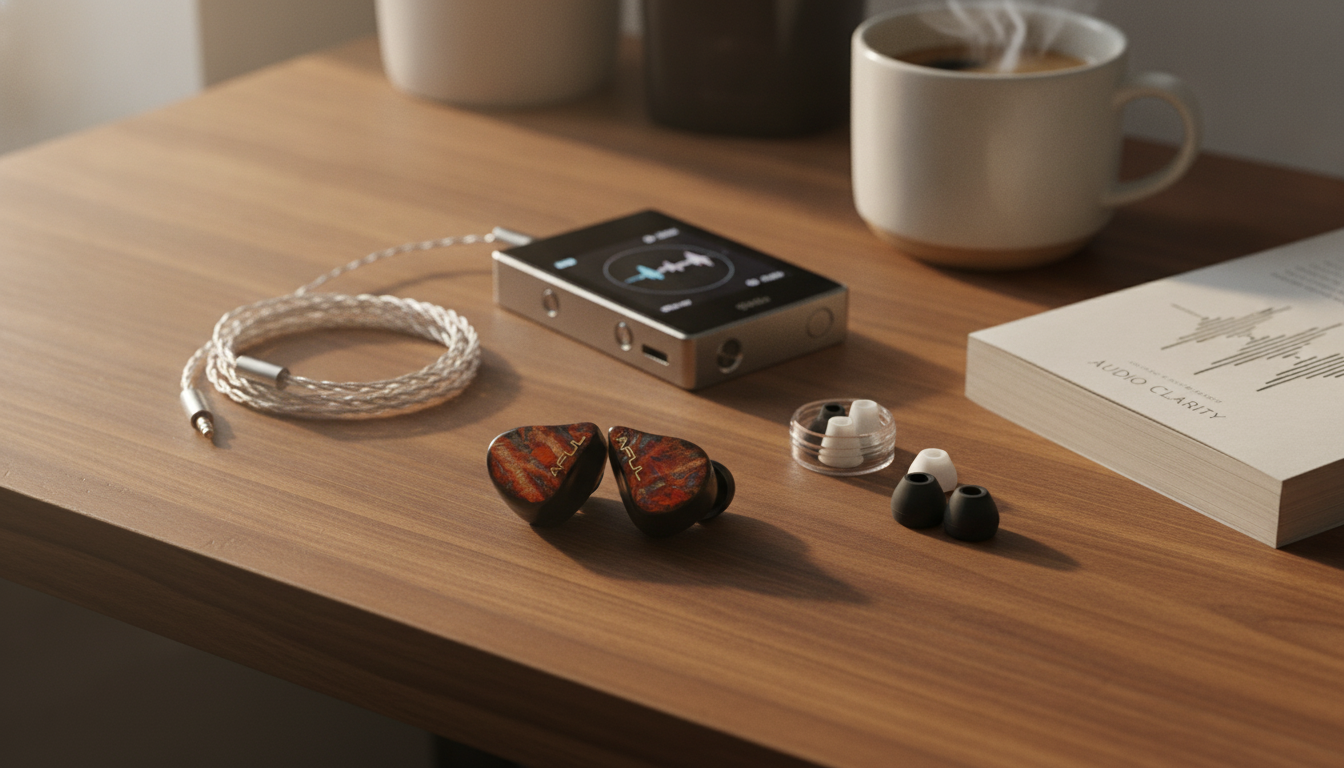
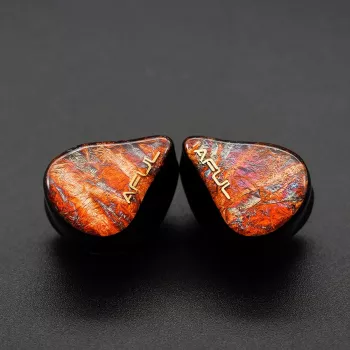
High-Fidelity Hybrid In-Ear Monitor with 5 Drivers and Detachable Cable: What to Expect in Sound, Fit, and Daily Use
A hybrid in-ear monitor (IEM) blends multiple driver types to deliver detail, impact, and separation in a compact form. With five drivers per side and a detachable cable, this style of earphone is geared toward listeners who want clear layering, controlled bass, and a setup that’s easier to maintain over time. Below is a practical look at how multi-driver hybrids work, what shapes comfort and isolation, how to pair them with common sources, and how to keep performance consistent. For more guidance, see Best IEMs / Earphones – Prime Audio Reviews.
Hybrid IEM basics: why multiple driver types are used
Most hybrid IEMs pair a dynamic driver (commonly tasked with bass) with balanced armature drivers (often handling mids and highs). The idea is simple: dynamic drivers move more air for physical low-end punch, while armatures tend to react quickly, helping with crisp transients and fine detail. For further reading, see [PDF] Insurance Capital Standard.
With five drivers, the tuning goal is often better separation and headroom—bass that holds its shape, mids that stay organized, and treble that adds sparkle without forcing one driver to do everything. The crossover (electrical and/or acoustic) is the real “traffic controller” here; a well-designed crossover makes a multi-driver IEM sound coherent rather than stitched together. Driver count alone doesn’t guarantee better sound—nozzle geometry, damping, venting, and overall tuning matter just as much.
Sound profile expectations: detail, bass control, and staging
Bass: A dynamic driver can provide tactile slam, especially on kick drums and synth hits. What to listen for is decay control—notes should stop cleanly. If bass lingers too long, it can create mid-bass bloom that masks vocals and guitars.
Midrange: Vocal clarity often depends on how smoothly the IEM transitions through the upper-bass and lower-mids. A strong hybrid tuning keeps male vocals full without turning thick, and keeps female vocals present without sounding shouty.
Treble: Balanced armatures can highlight micro-detail—string texture, cymbal shimmer, room reverb. The best outcomes avoid sharp peaks that cause sibilance (“s” sounds) or fatigue over longer sessions. If treble feels edgy, tips, insertion depth, and gain settings can matter as much as the tuning itself.
Imaging and separation: Multi-driver hybrids can improve left-right definition and help you “see” where instruments sit in the mix. Seal and tip selection still play a major role; a leaky fit can collapse stage and smear imaging.
Volume behavior: Efficient IEMs often sound lively at low volumes. Excessive gain can exaggerate treble, raise the noise floor, and increase listening fatigue. For safe volume habits, see the World Health Organization’s safe listening guidance.
Key specs to verify before buying (and why they matter)
Before committing to a 5-driver hybrid, check a few basics that directly affect daily usability:
Quick checklist for evaluating a 5-driver hybrid IEM
| Feature | What to look for | Why it matters |
|---|---|---|
| Detachable cable | 2-pin or MMCX; strain relief; low microphonics | Easier replacement, upgrades, and longer product life |
| Driver layout | Dynamic for bass + armatures for mids/highs | Balances impact with speed and detail |
| Fit & seal | Stable insertion; comfortable shell; multiple tip sizes | Directly affects bass quantity, isolation, and imaging |
| Source matching | Low-noise output; appropriate power | Prevents hiss and preserves dynamics |
| Tuning controls | Filters/vents (if present) or consistent channel matching | Helps maintain a coherent, predictable sound |
Detachable cable benefits: durability, comfort, and upgrades
Fit, isolation, and ear tips: getting the sound you paid for
Pairing with phones, dongles, DAC/amps, and players
Sensitive multi-driver IEMs can reveal the personality of the source more than expected. A low-noise dongle or DAP is often the cleanest match if you notice hiss. Keeping output impedance low is also helpful for preserving the intended frequency response on multi-driver designs; for deeper context, see Audio Science Review’s discussion of output impedance and frequency response.
More power isn’t automatically better. Clean amplification at moderate volume typically sounds smoother than pushing gain high. If you’re estimating whether a device has enough headroom, a calculator can help frame expectations (see the Headphonesty headphone power calculator), but real-world listening still depends on your preferred loudness and the IEM’s sensitivity.
Care and maintenance for long-term performance
Who this 5-driver hybrid style suits best
Product snapshot and in-stock picks
- High-Fidelity Hybrid In-Ear Monitor with 5 Drivers and Detachable Cable ($297.51)
- Calvin Klein Retro Square Sunglasses with Dark Lenses ($133.24)
- IPL Eye Beauty Device with Three-Color Light & Vibration ($27.49)
FAQ
Does a five-driver hybrid automatically sound better than a single-driver IEM?
No—driver count alone doesn’t guarantee quality. Tuning, crossover design, nozzle/venting choices, and especially fit and seal will have a bigger impact, though well-executed multi-driver hybrids can improve separation and headroom.
Will a detachable cable change the sound quality?
Most of the time, a cable change affects comfort, microphonics, and reliability more than frequency response. Noticeable sound changes usually come from seal, ear tips, source noise, or light EQ; balanced terminations only matter if the source supports them.
How can hiss be reduced when using sensitive in-ear monitors?
Use a low-noise dongle/DAC or player, keep gain low, and avoid turning the source up more than necessary. If hiss persists, check that the source has low output impedance; inline attenuators are a last resort when switching sources isn’t practical.









Leave a comment