Printable Self-Improvement Plan eBook: Goals to Action
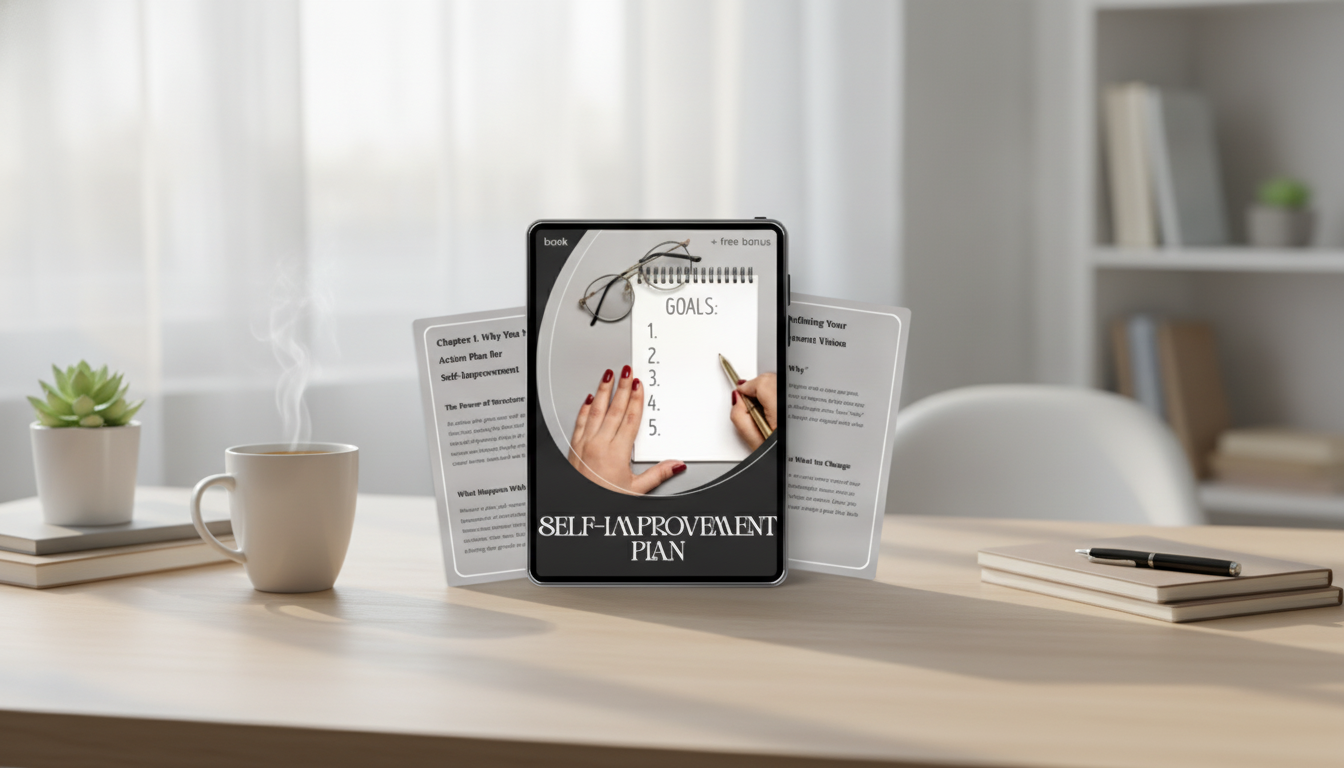
Your Self-Improvement Plan: A Printable Goal-Setting eBook for Building an Action Plan
A self-improvement plan works best when it turns big intentions into clear steps, simple tracking, and regular check-ins. This printable digital guide is designed to help map goals, choose supportive habits, and follow an action plan that stays realistic on busy weeks. Instead of relying on a burst of motivation, you set up a repeatable system: decide once, write it down, and make the next right step easy to follow.
What a Self-Improvement Plan Actually Includes
A solid plan is less about “trying harder” and more about creating structure that holds up in real life. A practical self-improvement plan typically includes:
- A clear focus area: one or two priorities that matter most right now (health, career, confidence, relationships, productivity, learning).
- A specific outcome: what “better” looks like in practical terms, not vague motivation.
- A step-by-step action plan: small actions scheduled into real days and routines.
- A tracking method: simple checkboxes or short reflections that show progress without perfectionism.
- A review rhythm: weekly and monthly checkpoints to adjust goals, habits, and expectations.
This approach aligns with well-known goal-setting frameworks that emphasize clarity and measurable steps (see APA’s definition of goal setting and UC Berkeley’s overview of SMART goals).
How the Printable eBook Helps Turn Goals Into Daily Action
The difference between a “good idea” and a plan you can actually follow is usually the middle: the translation from intention to calendar. A printable guide helps by making that translation repeatable.
- Breaks down goal-setting into guided prompts so decisions are made once and reused all month.
- Encourages measurable steps (time, frequency, or milestones) to reduce “all-or-nothing” thinking.
- Connects habits to a schedule so progress is supported by routine rather than willpower.
- Creates space for reflection: what worked, what didn’t, and what needs changing next week.
From idea to action: a simple planning flow
| Step | What to decide | Example output |
|---|---|---|
| Choose a focus | Pick one priority area | Energy + fitness |
| Define the outcome | Write a measurable result | Walk 30 minutes, 4x/week |
| Identify obstacles | List likely blockers | Late meetings, low motivation |
| Select actions | Choose 2–4 small steps | Schedule walks; prep shoes; short backup workout |
| Track + review | Decide how to monitor | Weekly check-in + habit tracker |
What’s Inside the Guide (Typical Sections to Expect)
A printable goal-setting eBook is most helpful when it covers both planning and follow-through. Typical sections include:
- Goal definition pages: turning a broad intention into a specific target and timeframe.
- Action-plan pages: mapping next steps, deadlines, and supportive resources.
- Habit-building tools: selecting routines that make the goal easier to maintain.
- Progress trackers: daily/weekly tracking with quick notes for patterns and triggers.
- Reflection pages: lessons learned, adjustments, and a reset plan after setbacks.
For a structured, print-ready option, see Your Self-Improvement Plan | Printable Goal-Setting eBook, designed to guide you from goal selection to weekly review without turning the process into a full-time project.
A Step-by-Step Way to Use It in 30–45 Minutes
One of the most effective ways to stay consistent is to set up a “good enough” plan quickly, then refine it during reviews. A simple 30–45 minute setup can look like this:
- Step 1: Choose one priority for the next 2–4 weeks (avoid stacking multiple major life changes at once).
- Step 2: Write a concrete outcome and a “minimum baseline” version for hard days.
- Step 3: Pick 2–3 actions that can be scheduled immediately (time-block or attach to an existing routine).
- Step 4: Decide how progress will be tracked (checkboxes, weekly total, or short reflections).
- Step 5: Do a weekly review: keep what works, revise what doesn’t, and simplify if consistency drops.
If the goal is “exercise more,” a baseline might be “10 minutes after lunch” and the stretch version might be “30 minutes, four times a week.” That way, a stressful week doesn’t erase your momentum—you still have a version that counts.
Printing and Using the Pages: Practical Options
For goals that include outdoor walks or midday reset breaks, a small practical add-on can remove friction. Something as simple as keeping Calvin Klein Retro Square Sunglasses with Dark Lenses by the door can make it easier to follow through on a “short walk instead of a scroll” habit.
Who It’s Best For (and When It’s Not the Right Fit)
If part of your self-improvement focus includes personal care routines, pairing planning with an easy, scheduled self-care block can help habits stick. For example, a weekly “reset” appointment with yourself could include a short routine using an at-home tool like the IPL Eye Beauty Device with Three-Color Light & Vibration—not as a requirement, but as a consistent cue to slow down and complete your weekly review.
Making the Plan Stick: Small Tweaks That Improve Follow-Through
FAQ
How is an action plan different from a goal?
A goal is the outcome you want (like “walk 30 minutes, 4x/week”), while an action plan is the set of scheduled steps, habits, and checkpoints that make that outcome more likely (like choosing days, setting a backup 10-minute option, and doing a weekly check-in).
Can the pages be printed more than once?
Yes. Because it’s a digital printable guide, you can reprint pages for different goals, new weeks, or revised plans, and you can also print only the pages you need to avoid extra paper.
What if motivation drops after the first week?
Lower the baseline to a minimum version you can keep (even 5–10 minutes), review what got in the way, and adjust during your weekly check-in. The goal is to modify the plan—not quit it—so momentum stays intact.











Leave a comment