-
Shop
- Adidas
- Advanced Technologies
- Armani
- Bags
- Best-Sellers
- Birkenstock
- Boss
- Calvin Klein
- Car Accessories
- Crocs
- Dating & Social Skills
- Digital Resources
- Budgeting & Saving
- Emotional Intelligence
- Entrepreneurship & Business Growth
- Financial Independence
- Financial Mindset & Psychology
- Goal Setting
- Leadership
- Mindfulness
- Motivation
- Positive Thinking
- Productivity
- Self Confidence
- Sleep Improvement
- Stress Management & Relaxation
- Yoga & Mind-Body Practices
- Dr. Martens
- Drones
- Education & Learning
- Family & Parenting
- Fashion
- Fashion Accessories
- Financial Education
- Furniture
- Gadgets
- Health & Beauty
- Health & Wellness
- Home & Garden
- Home Decor
- Home Supplies
- Kids & Babies
- Lighting
- Massagers
- Mindset
- New Balance
- Nike
- Patio, Lawn & Garden
- Personal Growth
- Pet Care
- Pet Supplies
- Pets
- Shoes
- Sport & Outdoors
- Summer 2025 Fashion Collection
- Sunglasses
- Super Deals
- Timberland
- Tommy Hilfiger
- Travel
- Vans
- Wealth
- Winter Fashion
- Women’s Wellness & Lifestyle
- YouTube Shorts Best-Sellers
Soccer Rebound Trainer Net Drills for Better First Touch
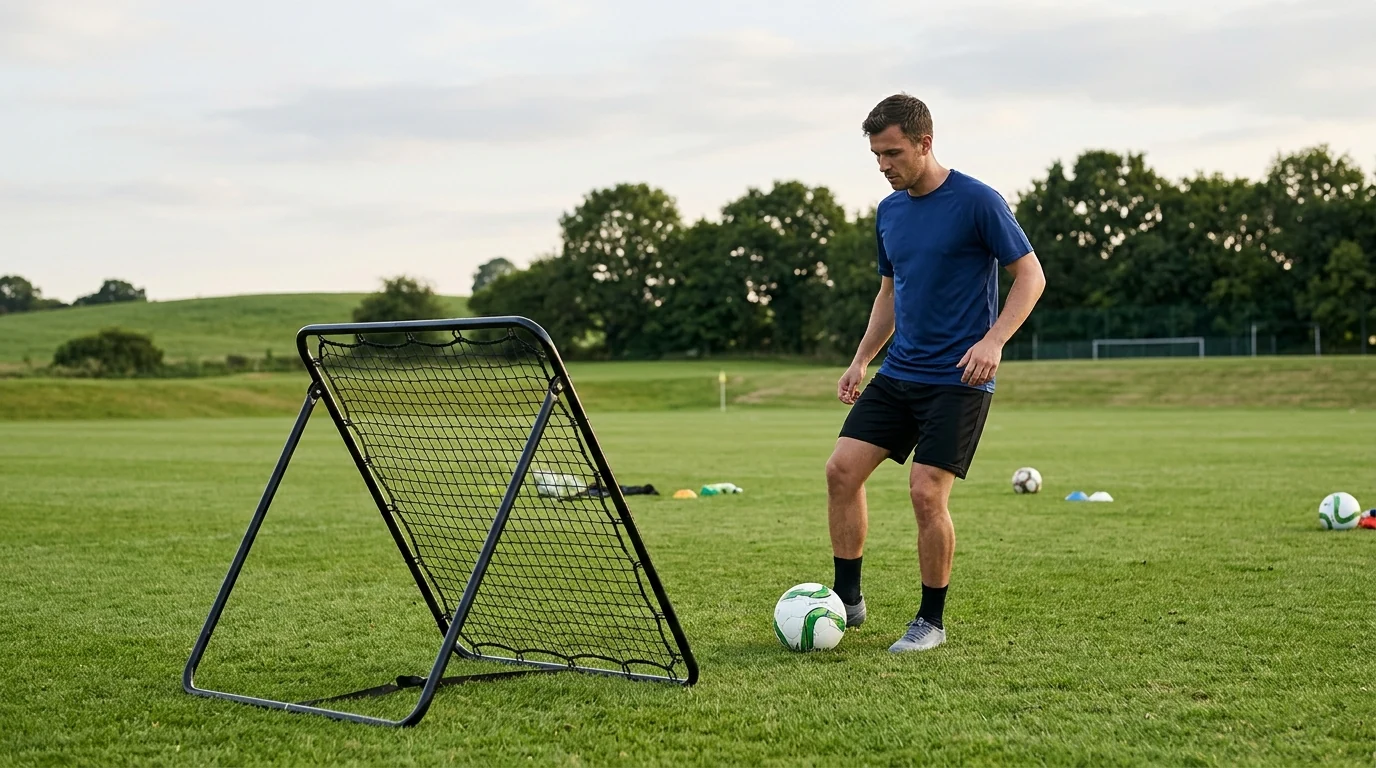
A productive soccer practice session does not always need a teammate. A rebound trainer net lets you pass, receive the returning ball, and prepare your next touch in a repeatable sequence. We like using ours as a dedicated drill station: you can keep the exercise simple, notice what changes from one repetition to the next, and build toward more demanding movements at your own pace.
Start With a Purpose for Each Session
Before your first pass, choose one thing to work on. You might aim to place passes more accurately, receive across your body, or control the ball before turning. Trying to improve everything at once can make it difficult to tell whether a drill is helping. A single goal gives you something specific to notice on every return.
Begin at a comfortable distance and pass at a pace that gives you time to react. Receive the ball, set it where you want it, and then pass again. If your first touch regularly gets away from you, slow down or simplify the movement rather than rushing through more repetitions. Once you can control the return consistently, increase the pace or add a new action.
Set up the net according to its instructions, with clear space around your practice area. Allow room not just for the expected return, but also for a pass that misses the net or rebounds differently than you anticipated. Keep people, pets, and breakable objects out of that space.
A Simple Rebound Practice Progression
| Stage | What to practice | What to focus on |
|---|---|---|
| Warm-up | Pass, receive, and reset at an easy pace | A balanced stance and controlled first touch |
| Build | Alternate right- and left-foot passes | Similar accuracy with either foot |
| Challenge | Receive, turn, then pass again | Preparing the ball for the next movement |
You do not need to complete every stage in every session. If the warm-up reveals a touch you want to improve, stay with it. Clean, deliberate repetitions are more useful than moving to a harder drill before you can control the simpler one.
Turn Repetitions Into Game-Ready Touches
Treat each returning ball as a new play, not merely the end of your pass. Watch its path, adjust your feet, and decide where the ball should go next. If your next pass will be with your right foot, for example, try to receive into a position that makes that pass comfortable. This gives the first touch a job beyond stopping the ball.
After a set of controlled returns, change one part of the drill. Shift your starting position, switch feet, or receive and turn before passing. Changing just one element helps you see how it affects your control. If the drill becomes hurried, return to an easier version until your touch is reliable again.
You can also give yourself a simple target: complete a short set in which each first touch leaves the ball ready for the next pass. Count controlled sequences rather than kicks. For younger players, keep sets short and targets achievable. Experienced players can add a decision—such as alternating the direction of the first touch—without making speed the only measure of progress.
For more coaching ideas to explore alongside your individual practice, visit U.S. Soccer Coaching or the FIFA Training Centre. A rebound station can support those broader training plans, but it does not replace working with teammates, opponents, and a coach when those opportunities are available.
Make It Part of Your Training Space
Our Soccer Rebound Trainer Net gives you a dedicated place for repeatable solo drills or an additional station during team training. Before each session, confirm that it is set up as directed and that the area remains clear. Conditions can change between practices, so take another look even if you have used the same spot before.
Plan a routine that is easy to repeat: start with comfortable passes, spend a few sets on your chosen skill, then finish with slower, accurate passes. Take breaks when you need them. If your technique becomes inconsistent, shortening the session may be more productive than pushing through.
When you finish, note one detail about your touch. Did you have more trouble receiving on one side? Did a turn leave the ball too far from your next step? Use that observation to choose the first drill for your next session. Our team favors this kind of small, practical adjustment over changing the whole routine each time you practice.
If you are also browsing our store for time outdoors, you can view our Calvin Klein Retro Square Sunglasses with Dark Lenses. Keep your practice choices focused on what lets you see the ball clearly and move comfortably in your training space.
FAQ
Can a soccer rebound trainer net help with first-touch practice?
Yes. Pass into the net, track the returning ball, and direct your first touch into position for the next pass. Start slowly and prioritize control.
How long should a rebound-net practice session be?
Use short sets with breaks, and stop when your technique becomes inconsistent. The right duration depends on your age, experience, and training load.
What should I check before using a rebound trainer net?
Follow the product’s setup instructions, confirm it is ready for use, and choose a clear area with room for returning or missed balls.
Recommended for you
Was this article helpful?
Yes
No








Leave a comment