-
Shop
- Adidas
- Advanced Technologies
- Armani
- Bags
- Best-Sellers
- Birkenstock
- Boss
- Calvin Klein
- Car Accessories
- Crocs
- Dating & Social Skills
- Digital Resources
- Budgeting & Saving
- Emotional Intelligence
- Entrepreneurship & Business Growth
- Financial Independence
- Financial Mindset & Psychology
- Goal Setting
- Leadership
- Mindfulness
- Motivation
- Positive Thinking
- Productivity
- Self Confidence
- Sleep Improvement
- Stress Management & Relaxation
- Yoga & Mind-Body Practices
- Dr. Martens
- Drones
- Education & Learning
- Family & Parenting
- Fashion
- Fashion Accessories
- Financial Education
- Furniture
- Gadgets
- Health & Beauty
- Health & Wellness
- Home & Garden
- Home Decor
- Home Supplies
- Kids & Babies
- Lighting
- Massagers
- Mindset
- New Balance
- Nike
- Patio, Lawn & Garden
- Personal Growth
- Pet Care
- Pet Supplies
- Pets
- Shoes
- Sport & Outdoors
- Summer 2025 Fashion Collection
- Sunglasses
- Super Deals
- Timberland
- Tommy Hilfiger
- Travel
- Vans
- Wealth
- Winter Fashion
- Women’s Wellness & Lifestyle
- YouTube Shorts Best-Sellers
A Simple Breathing Break for Busy Days
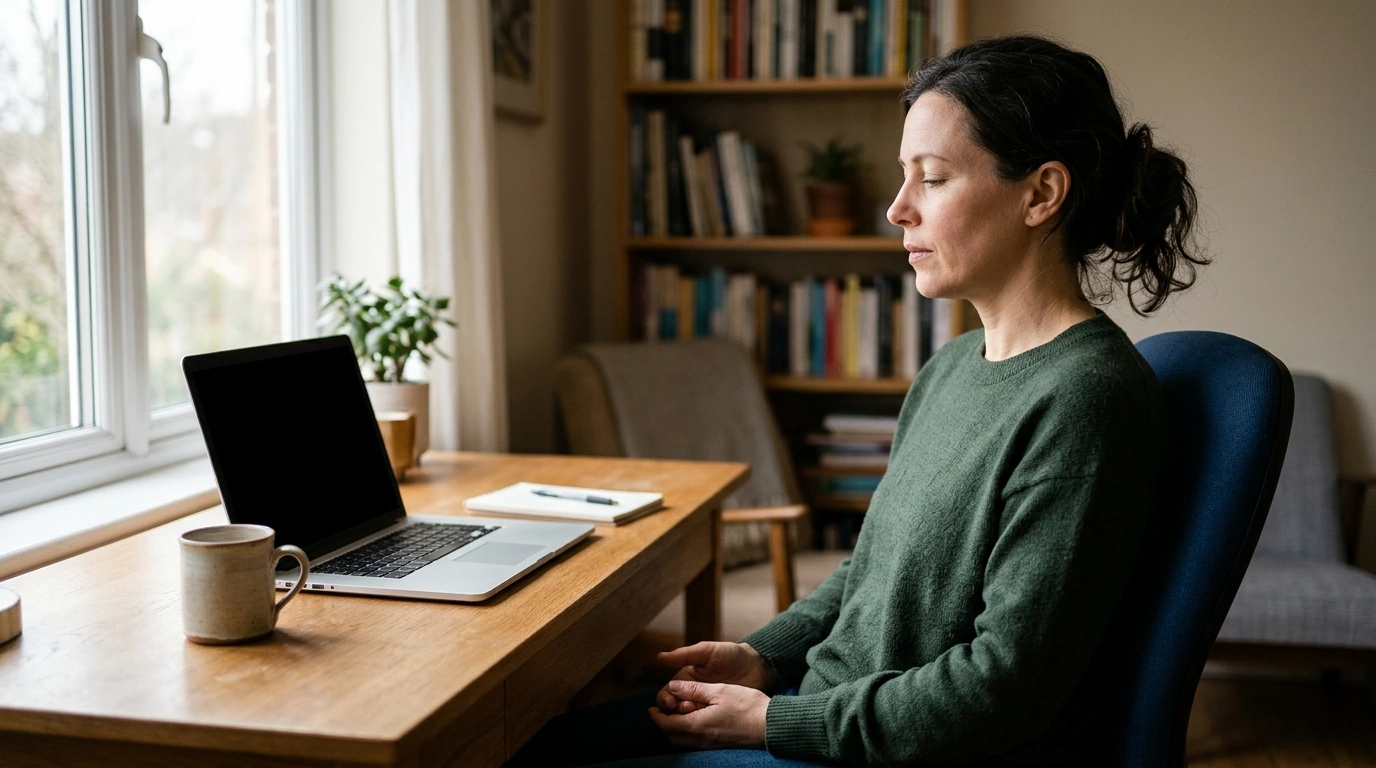
A breathing break does not need a timer, a quiet room, or a complicated routine. When your day feels crowded or your attention starts to drift, you can begin by pausing long enough to notice one natural breath. From there, you can decide whether to stay for a few more. We favor a gentle approach that you can adapt to the moment, rather than a rule about how breathing should feel.
Start with a comfortable breath
Find a position that feels steady, whether you are sitting or standing. Let your shoulders rest as comfortably as they can, and notice the pace of your breathing before you try to change anything. You might feel air moving at your nose, or notice a small movement in your chest or abdomen. There is no need to find the “right” sensation.
Begin with an easy, unforced breath instead of trying to inhale as deeply or exhale as slowly as possible. If counting makes the pause feel demanding, leave counting out. If you become dizzy or uncomfortable, stop the exercise and return to your usual breathing. A breathing break should be something you can adjust or end, not something you have to push through.
The NHS guidance on breathing exercises for stress also emphasizes getting comfortable and breathing gently. You can use that as a reminder to keep the experience manageable, especially when you are first making room for these pauses.
Match the pause to the moment
A breathing exercise is a flexible pause, not a promise of instant calm, sharper concentration, or more energy. Before a focused task, following a few natural breaths may give you a moment to choose what to do first. During a stressful moment, you might simply notice how your body feels while you sit or stand comfortably. In an afternoon lull, a short pause between activities can mark a fresh start without asking you to force a different breathing pattern.
You can make any of these pauses shorter or longer according to what feels comfortable. One or two breaths may be enough time to notice that you have paused. On another day, you may want to linger. The useful question is not whether you reached a particular number of minutes, but whether the pause fits into your day without becoming another obligation.
Simple ways to make room for a breathing pause
| Moment | A gentle place to start | What to notice |
|---|---|---|
| Before a busy task | Pause and follow a few natural breaths. | Whether your attention is ready to return to one task. |
| During a stressful moment | Settle into a comfortable position and breathe without forcing the pace. | How your body feels as you pause. |
| Between activities | Take a brief breathing break before moving on. | Whether a pause helps you make a more deliberate transition. |
Make the practice easy to revisit
An existing part of your day can serve as a simple reminder. You could pause after opening your laptop, when you step away from a task, or as you get ready for bed. Choose a cue you already encounter rather than building an elaborate schedule around the exercise. Starting small makes it easier to return to the practice without feeling that you have fallen behind.
Our team recommends deciding in advance what a comfortable version looks like for you. Perhaps it is sitting back from your desk and noticing three breaths. Perhaps it is standing still for a moment before you move to the next activity. You can change that plan whenever your circumstances change; a brief pause still counts on a busy day.
If you would like a resource devoted to breathing exercises, our digital download Just Breathe: A Simple Guide to Calm, Focus & Energy Through Breathing Exercises is an option to keep close at hand. You do not need to buy a guide to begin: noticing your next comfortable breath is a complete starting point. For a different kind of transition, stepping outside for a short break may also appeal to you; our Calvin Klein Retro Square Sunglasses with Dark Lenses are an optional everyday accessory, not part of a breathing exercise.
Keep expectations gentle
Breathing exercises can have a place in a self-care routine, but they are not a replacement for medical or mental health care. The National Center for Complementary and Integrative Health’s overview of relaxation techniques provides additional context on using these practices alongside, rather than instead of, appropriate care.
If stress persists, you have breathing concerns, or you are unsure whether a particular exercise is appropriate for you, speak with a qualified healthcare professional. You can also set aside any technique that feels unpleasant. Today, consider choosing one comfortable moment for a brief, unforced pause. Notice a breath, then move on when you are ready.
FAQ
How long should a breathing break be?
Start with a brief pause that feels comfortable. Ease and consistency matter more than reaching a particular number of minutes.
Do I need to take deep breaths for a breathing exercise to help?
No. Begin by noticing your natural breathing, and avoid forcing deep breaths if they feel uncomfortable.
Can breathing exercises replace treatment for stress or anxiety?
No. They can be part of a self-care routine, but persistent or concerning symptoms deserve guidance from a qualified healthcare professional.
Recommended for you


Was this article helpful?
Yes
No








Leave a comment