-
Shop
- Adidas
- Advanced Technologies
- Armani
- Bags
- Best-Sellers
- Birkenstock
- Boss
- Calvin Klein
- Car Accessories
- Crocs
- Dating & Social Skills
- Digital Resources
- Budgeting & Saving
- Emotional Intelligence
- Entrepreneurship & Business Growth
- Financial Independence
- Financial Mindset & Psychology
- Goal Setting
- Leadership
- Mindfulness
- Motivation
- Positive Thinking
- Productivity
- Self Confidence
- Sleep Improvement
- Stress Management & Relaxation
- Yoga & Mind-Body Practices
- Dr. Martens
- Drones
- Education & Learning
- Family & Parenting
- Fashion
- Fashion Accessories
- Financial Education
- Furniture
- Gadgets
- Health & Beauty
- Health & Wellness
- Home & Garden
- Home Decor
- Home Supplies
- Kids & Babies
- Lighting
- Massagers
- Mindset
- New Balance
- Nike
- Patio, Lawn & Garden
- Personal Growth
- Pet Care
- Pet Supplies
- Pets
- Shoes
- Sport & Outdoors
- Summer 2025 Fashion Collection
- Sunglasses
- Super Deals
- Timberland
- Tommy Hilfiger
- Travel
- Vans
- Wealth
- Winter Fashion
- Women’s Wellness & Lifestyle
- YouTube Shorts Best-Sellers
40-Inch Cactus Cat Tree: Scratch, Lounge, Hide, Play
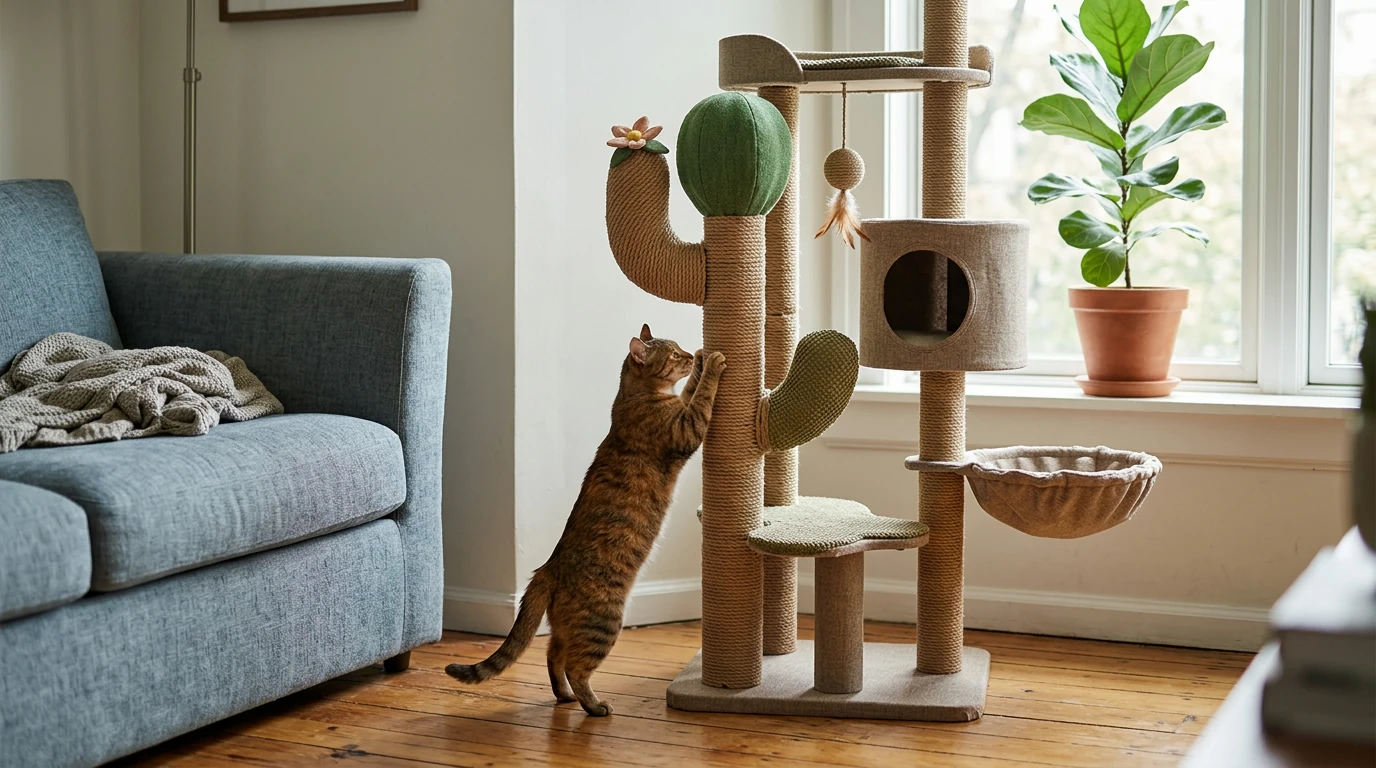
A Compact “Home Base” for Indoor Cats
A good cat tree does more than look cute in the corner—it gives indoor cats a reliable place to stretch, scratch, perch, and reset. Our Cactus Cat Tree 40″ with Scratching Post, Hammock, Condo & Batting Ball is built as a small home base with distinct zones: a scratching post for daily claw care, a hammock for full-body lounging, a condo for hide-and-rest comfort, and a batting ball for quick bursts of play. At 40 inches tall, it adds vertical territory without taking over your floor plan.
What This Cat Tree Solves in Everyday Cat Life
- Redirects scratching to an appropriate surface: A dedicated scratching post helps protect sofas, rugs, and door frames by giving your cat a clear “yes” spot.
- Supports natural routines: Climb → observe → play → nap is a common indoor pattern, and a multi-level tree keeps those needs in one place.
- Creates a personal zone in busy homes: A condo-like hideaway and an elevated rest spot can reduce stress when guests visit or schedules get loud.
- Encourages movement in small spaces: Vertical territory can make a studio apartment feel bigger to your cat without expanding the footprint.
- Adds quick enrichment without extra gear: The batting ball is built in for short play sessions many cats start on their own.
For a deeper dive into why cats benefit from “territory,” perches, and scratch options, you can also reference the American Association of Feline Practitioners (AAFP) Feline Environmental Needs Guidelines and enrichment basics from the ASPCA.
Cactus Cat Tree 40″: The “Zones” Cats Actually Use
Cats don’t use cat furniture the way we imagine they will—they use it the way it fits their daily rhythm. Here’s how the zones on this 40″ tree typically get adopted over time.
Scratching Post Zone
Place the tree near the spot your cat already scratches (couch edge, doorway trim, or the corner of a rug). When the “approved” scratch surface is close to the old habit, switching becomes nearly effortless—especially if you introduce it with a pinch of catnip or silvervine.
Hammock Lounging Zone
The hammock is for cats who like a cradled nap that supports the whole body. In many homes, it becomes the default landing pad after meals or a quick play burst.
Condo Hideaway Zone
The covered condo creates a secure retreat for decompression. It’s particularly useful if your cat prefers privacy to sleep, if your household is busy, or if your cat gets overstimulated by open-room traffic.
Perch/Transition Surfaces
The intermediate levels act like “steps” so your cat can climb in stages and pause to scan the room. Those mid-level pauses are normal; cats often evaluate the space before committing to a nap spot.
Batting Ball Play Zone
The built-in batting ball supports solo play and quick swat sessions—handy when the zoomies hit and you want a safe, contained outlet that doesn’t require you to break out extra toys.
Quick Feature Map
| Feature | Best for | Placement tip |
|---|---|---|
| Scratching post | Daily claw maintenance and stretching | Put within a few feet of your cat’s usual scratch target |
| Hammock | Deep rest and full-body lounging | Position the tree where naps already happen (sunny spot or calm corner) |
| Condo | Private naps and decompression | Avoid high-traffic walkways so the hideaway feels secure |
| Batting ball | Short play bursts and self-led engagement | Face it toward open floor space so paws can swipe freely |
| 40″ height | Vertical territory without dominating the room | Great near windows, beside desks, or in living rooms as a “cat zone” |
Choosing the Right Spot: Stability, Traffic, and “Cat Sightlines”
If you’re working specifically on scratch training, the Humane Society’s scratching guidance offers practical behavior framing that pairs well with a dedicated scratch post.
Getting Cats to Use It (and Leave the Furniture Alone)
Simple Care That Keeps It Inviting
A Cozy Add-On for Naps: Pair It with a Dedicated Cave Bed
Our team likes placing the bed near—but not directly under—the tree so your cat can choose between private rest and elevated lounging. A simple option is our Cozy Cartoon Cat Cave Bed for Kittens.
FAQ
Is a 40″ cat tree tall enough for everyday climbing and lounging?
Yes—40″ gives your cat meaningful vertical territory for climbing, stretching, and perching without overwhelming your room. If you place it near a window, the height becomes even more valuable because your cat can observe the space and outside activity.
Will the condo and hammock work for adult cats, or mostly kittens?
Many adult cats use both: condos for private decompression and hammock-style spots for supported lounging. The key factor is your cat’s preferred sleep style—some adults love enclosed naps, while others rotate between covered and open resting areas.
How do cats learn to use the scratching post instead of the couch?
Start by placing the tree near the couch corner your cat targets, then lure your cat to the post with play or treats and reward scratching right away. Add catnip or silvervine to the post, and temporarily protect the couch with a deterrent until the post becomes the default.
Recommended for you

Was this article helpful?
Yes
No









Leave a comment