-
Shop
- Adidas
- Advanced Technologies
- Armani
- Bags
- Best-Sellers
- Birkenstock
- Boss
- Calvin Klein
- Car Accessories
- Crocs
- Dating & Social Skills
- Digital Resources
- Budgeting & Saving
- Emotional Intelligence
- Entrepreneurship & Business Growth
- Financial Independence
- Financial Mindset & Psychology
- Goal Setting
- Leadership
- Mindfulness
- Motivation
- Positive Thinking
- Productivity
- Self Confidence
- Sleep Improvement
- Stress Management & Relaxation
- Yoga & Mind-Body Practices
- Dr. Martens
- Drones
- Education & Learning
- Family & Parenting
- Fashion
- Fashion Accessories
- Financial Education
- Furniture
- Gadgets
- Health & Beauty
- Health & Wellness
- Home & Garden
- Home Decor
- Home Supplies
- Kids & Babies
- Lighting
- Massagers
- Mindset
- New Balance
- Nike
- Patio, Lawn & Garden
- Personal Growth
- Pet Care
- Pet Supplies
- Pets
- Shoes
- Sport & Outdoors
- Summer 2025 Fashion Collection
- Sunglasses
- Super Deals
- Timberland
- Tommy Hilfiger
- Travel
- Vans
- Wealth
- Winter Fashion
- Women’s Wellness & Lifestyle
- YouTube Shorts Best-Sellers
45cm Octa Quick-Release Softbox: Bowens Mount Guide
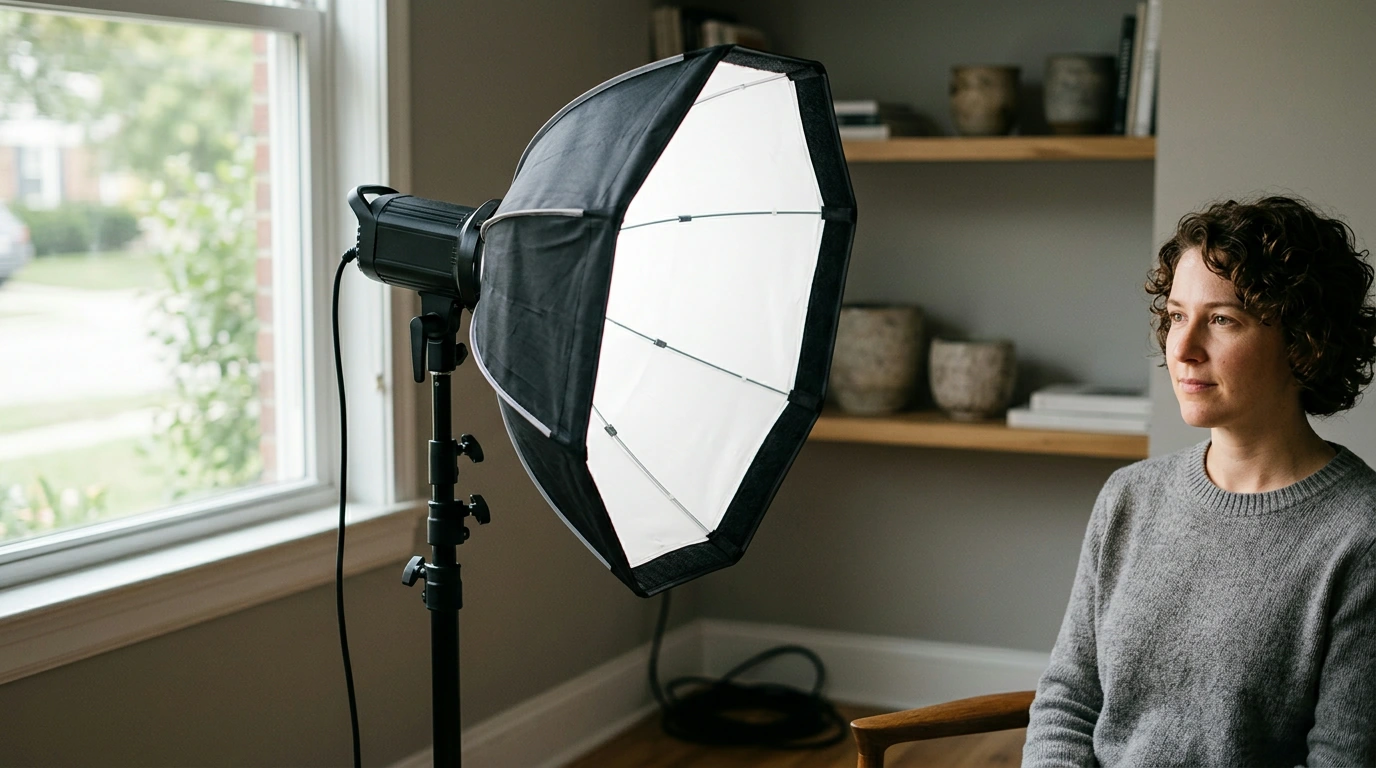
Soft, Controlled Light Without the Setup Headache
For portraits, products, and content creation, the difference between “bright” and “beautiful” often comes down to light shape and control. Our 45cm Octagonal Quick Release Softbox with Bowens Mount is built for creators who want flattering wrap, crisp catchlights, and a modifier that sets up quickly and packs down without fuss. If you’re working in a bedroom studio, a small office, or a tight corner of a storefront, this size hits a sweet spot: soft enough to look polished, compact enough to stay controllable. For more guidance, see Portable Softbox Light Best Softbox Portable Softbox Best Softbox ….
Why a 45cm Octagonal Softbox Earns a Permanent Spot
An octa is a classic for a reason—especially in smaller sizes where every inch of control matters. For further reading, see Studio Equipment – Camera Valley.
- Rounder catchlights: The octagonal shape produces natural-looking, round catchlights that suit headshots, beauty work, and talking-head video.
- Softness with direction: At 45cm, you get smoothing and wrap without lighting up the entire room. It’s large enough to soften skin texture, but small enough to keep spill in check.
- Flexible role: Use it as a close key light for portraits, or as a controlled fill paired with a larger source when you need consistency.
- Product-friendly highlights: For tabletop and ecommerce-style product setups, that controlled highlight shape helps you repeat a look across a whole batch.
Quick Release Design: Faster Setups, Easier Breakdowns
If you’ve ever lost time fighting tension rods, you already know why quick release matters. Our team likes quick release modifiers for real-world workflows where you’re moving fast and trying to stay consistent.
- Less time “building,” more time shooting: Quick release frames reduce the setup friction—helpful when switching between scenes, clients, or products.
- Better for short sessions: Interviews, reels, livestreams, and quick product runs all benefit when you can open and close your modifier smoothly.
- Gentler on diffusion over time: A streamlined open/close motion reduces repeated yanking and twisting, which helps protect diffusion material and seams.
Bowens Mount Compatibility: Built to Fit the Lights You Actually Use
Bowens (S-type) is one of the most common standards for studio strobes and many LED monolights, which makes this softbox easy to integrate into an existing kit. If you’re building a lighting “ecosystem,” standardizing on Bowens can simplify everything: one mount style, multiple modifiers, fewer adapters to forget.
Quick Compatibility Checklist
| Check | What to confirm | Why it matters |
|---|---|---|
| Mount type | Light lists Bowens / S-type compatibility | Ensures the softbox locks on securely |
| Clearance | Enough space around the mount area (controls, yoke, handle) | Prevents the softbox from bumping controls or fans |
| Intended output | Strobe or continuous light brightness is adequate | A 45cm modifier is efficient, but diffusion still reduces intensity |
| Use style | Stationary studio vs. mobile | Quick release helps both, especially frequent pack-down |
What This Softbox Is Best At (and How to Position It)
- Portrait key light: Place it slightly above eye level and angle down. Move it closer for smoother transitions and more wrap; pull it back when you want more shape and contrast.
- Product lighting: Use it as a controlled highlight source for glossy packaging, bottles, and tech. Small angle changes dramatically reshape reflections.
- Content creation: Keep it just out of frame at roughly a 30–45° angle for dimensional facial light without harsh shadows.
- Hair/rim accents: Put it behind and to the side, then aim carefully to avoid flare. Increasing distance tightens the edge and reduces spill into the lens.
Control Softness, Contrast, and Spill in Tight Spaces
In smaller rooms, precision matters more than raw size. The 45cm octa gives you control, and your placement does the rest.
- Distance controls softness: The closer you place it, the larger it appears relative to your subject, and the softer the falloff looks—especially for head-and-shoulders portraits.
- Angle controls shadow shape: Small rotations can shift nose and cheek shadows a lot when working close.
- Feathering controls contrast: Aim the softbox slightly past your subject so they’re lit by the edge of the beam; highlights often look smoother and less “hot.”
- Background control: Keep the modifier close and aim intentionally to avoid washing the wall. You’ll get a richer background and more subject separation.
If you want a deeper fundamentals refresher on shaping and softening light, these guides are solid: B&H Explora: Lighting 101, Adorama: Understanding light modifiers, and Profoto: Light shaping.
Pairing Ideas: A Simple Two-Light Flow That Stays Consistent
More In-Stock Picks from Our Team
- IPL Eye Beauty Device with Three-Color Light & Vibration
- Calvin Klein Retro Square Sunglasses with Dark Lenses
- Cozy Cartoon Cat Cave Bed for Kittens
Care and Handling for Long-Term Performance
FAQ
Will this 45cm octagonal softbox fit any Bowens mount light?
It’s designed for the Bowens/S-type standard, which is widely used across strobes and many LED monolights. To avoid surprises, confirm your fixture explicitly lists Bowens (S-type) compatibility or plan to use a Bowens adapter if it uses a different mount.
Is 45cm large enough for soft portrait lighting?
Yes—when you place it close, it becomes a large apparent source and produces soft, flattering transitions for head-and-shoulders portraits. Move it farther away and it becomes more directional with more contrast, which can also be a desirable look.
What’s the advantage of an octagonal softbox compared to a square one?
An octagonal softbox tends to produce rounder catchlights and a more circular-feeling reflection profile, which many people prefer for faces and glossy surfaces. Both shapes can be equally soft; the main difference is how highlights and edges present in reflections.
Recommended for you
Was this article helpful?
Yes
No







Leave a comment